Event debrief - Investing in Energy Transition Milan 2025
 Mathilde Dorbessan
EU
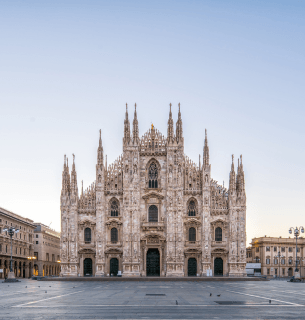
MultisectorsEventEsgGeopoliticsFundsFinancingPolicy & RegulationRiskinspiratia once again headed to Milan for our annual Investing in Energy Transition Summit. The conference, held on 25 September, brought together a host of experts from developers, lenders and advisers to policy makers and market analysts, all of whom play a pivotal role in the Net Zero race.
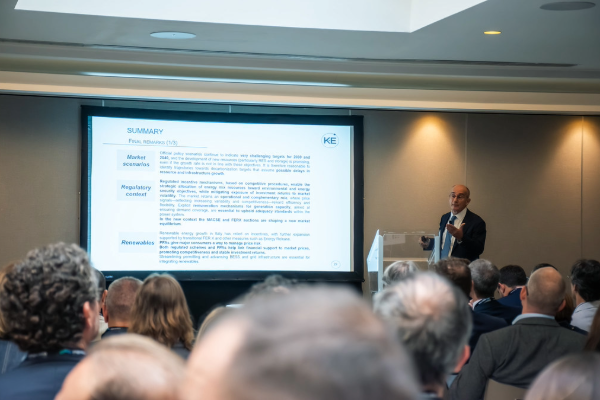
Key to Energy's Luigi Michi kick started the day's proceedings with his break down of the pressing challenges to Europe's energy transition efforts.
In his presentation, Michi lays out the challenges faced by renewables, from the price cannibalisation issue with solar plants to rising CapEx costs for battery energy storage systems (BESS).
He addressed the permitting and grid access concerns for green energy generation assets across the board in addition to Italy's seemingly lagging efforts to address the issues.
He also touches on the strain on energy grids brought on by increased demand for data centre capacity and how revenue staking can be used to provide price certainty to developers and prevent revenue losses.
Michi highlights the widening gap between the current rate of renewables build out and the wider net zero targets.
Panel 1 - Financing the Energy Transition
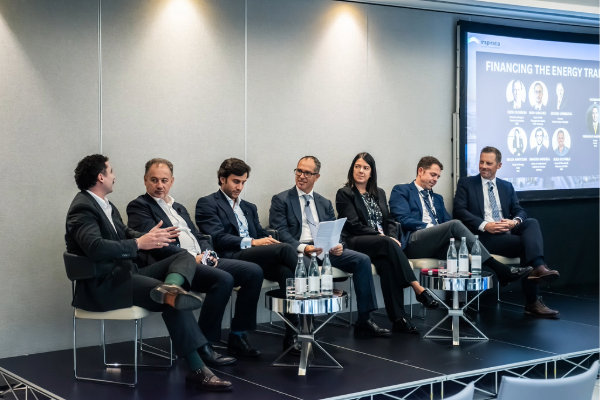
Panellists included:
- Amadeu Anguela - Head of Institutional Capital for Europe at Enfinity Global
- Arturo Sferruzza - Partner, Norton Rose Fulbright
- Giulia Bartolini - Managing Director, Head of Energy, Italy at ING
- Jesus de Pablo - Head of Structured Finance and M&A at FRV
- Keith Paterson - Director, Corporate Banking Europe at CIBC
- Rafa Sanchez - Director, Corporate Banking Europe at PMC Treasury
The panel was moderated by Pierpaolo Mastromarini, Partner at Bird & Bird.
Key takeaways
The first panel of the day delves into the evolving structures used to finance renewables. The panellists break down the risk profiles associated with different asset classes and how financiers and developers have adapted to the evolving market trends.
The panel discusses the attitude towards mature renewables asset classes and the benefits of scale for securing financing to fund build out. they also expand on the increasing struggle to find the optimal balance between different financing sources in a bid to generate an acceptable rate of return on investment.
They also touch on the place for standardised financing structures and how these metrics differ from developers to lenders.
The panel wrapped up the discussion with the acknowledgement of increasing complex market conditions and how developers can manage risks associated with delivery and offtake.
Panel 2 - The Building Blocks: Developers Present a Business Case
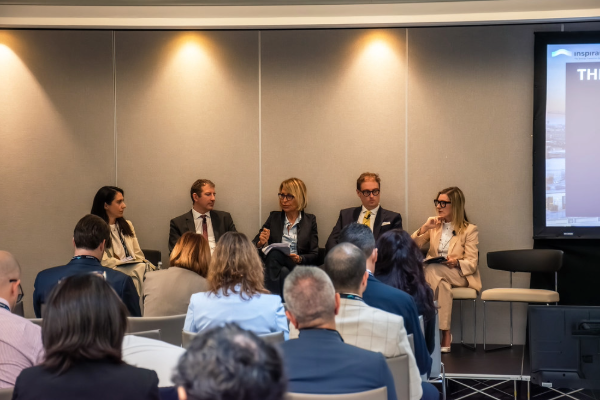
Panellists included:
- Cristiano Spillati - Managing Director at Limes Renewable Energy
- Laura Belardinelli - General Counsel at Galileo Green Energy
- Massimo Roderi - Head of Business Development at TERNA Energy Solutions
- Kyriaki Karypidou - Legal Counsel at FRV
- Paolo Nicora - Market Manager Italy at DNV
The panel was moderated by Cristina Martorana, partner at Legance.
Key takeaways
The Building Blocks panel explored how developers, advisors and infrastructure players are tackling the practical challenges of Italy's energy transition.
Meeting 2030 targets will require 50GW of new projects in just five years, plus storage and data centres, putting enormous pressure on EPC contractors, supply chains and the grid. Companies are scaling up production and engineering capacity, but coordination and planning are crucial.
Offshore wind, especially floating, shows promise but faces hurdles: complex auctions, regulatory uncertainty and port infrastructure gaps. While large consortia dominate, smaller players still add value through innovation and flexibility.
Speakers noted that battery storage is advancing quickly, with lessons from mature UK projects informing Italian approaches. Key issues include EPC risk allocation, linking PPAs to construction, and adapting contract structures. Investors increasingly focus on permitting, grid feasibility, and timelines as deal-breakers, while banks scrutinise guarantees and degradation risks.
The discussion closed with a call for collaboration across stakeholders. Offshore wind, storage, and multi-technology portfolios could all be game changers, but only if regulation, infrastructure and supply chains evolve according to market demand.
Panel 3 - BESS Takes the Spotlight
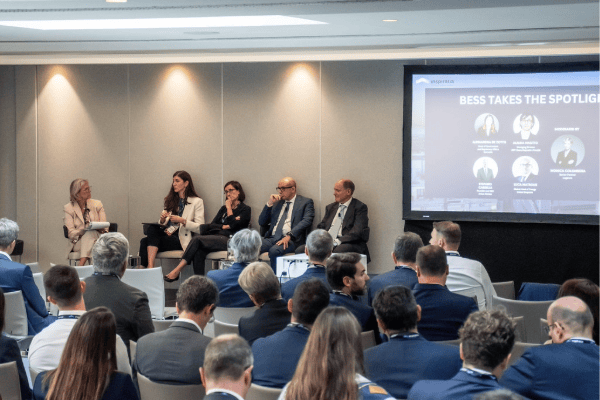
Panellists included:
- Alessandra De Zottis - Head of Government and Regulatory Affairs at Sonnedix
- Alessia Masitto - Managing Director at CDP Cassa Depositi e Prestiti
- Luca Matrone - Global Head of Energy at Intesa Sanpaolo
- Stefano Cassella - Founder and CEO of Arcus Advisor
The panel was moderated by Monica Colombera, senior partner at Legance.
Key takeaways
The BESS Takes the Spotlight panel highlighted battery storage's central role in Europe's energy transition. Storage enables renewables to provide dispatchable power, mitigates grid congestion and addresses risks of curtailment and price cannibalisation, which are projected to rise sharply by 2040.
Speakers highlighted the importance of policy frameworks: in Italy, the capacity market and MACSE auction offer bankable revenues and strong regulatory signals, making the country a leading storage market. However, uncertainty around future auctions is pushing developers to consider alternatives, such as tolling agreements and ancillary service stacking, as seen in the UK.
On financing, standalone projects dominate Italy today, but falling capex is expected to boost hybridisation with solar and wind. Mini-perm structures are favoured, allowing refinancing once merchant revenues gain wider acceptance.
Key issues for lenders include managing battery degradation, ensuring robust operational contracts, and addressing risks such as cross-defaults and the complex Fondo di Garanziamechanism.
Panel 4 - Il Futuro e Verde: An Italian Lens on Energy Transition
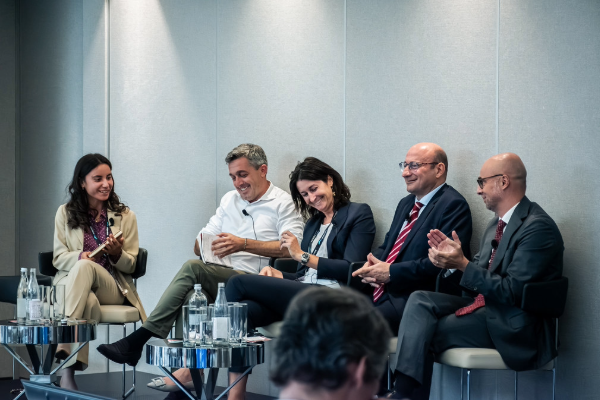
Panellists included:
- Paolo Grossi - Chief Commercial Officer at Galileo
- Roberto Castiglioni - Chief Executive Officer at Ikigai Capital
- Paola Agrati - CEO, Italy at ContourGlobal
- Michele Schiavone - Project CEO at Copenhagen Offshore Partners
The panel was moderated by Sofia Ubaldini, senior advisor at Our New Energy | Senior Advisor.
Key takeaways
The Il Futuro è Verde panel explored Italy's renewable market across PV, wind, and BESS.
Solar PV remains the lowest-cost technology, but regulatory uncertainty and permitting delays are blocking growth. Incentives such as the FER X Decree and energy release exist, yet unclear frameworks deter participation in auctions. The energy release scheme, while promising in theory, has suffered from poor execution, leaving developers and consumers in prolonged uncertainty.
Wind development is also constrained. Onshore projects face local opposition and slow permitting, while offshore, especially floating, is advancing with reasonable consenting processes but relies heavily on CfDs. Panellists warned that poorly designed auctions threatenproject delivery, given supply chain and price volatility.
By contrast, Italy's MACSE scheme positions the country as a leader in BESS, providing long-term certainty and attracting investors. With shorter build times and declining costs, storage offers fewer risks than offshore wind.
Speakers agreed that clear, consistent regulation is critical to unlock investment and sustain momentum.
Panel 5 - Financing Streams: Beyond Commercial Banks
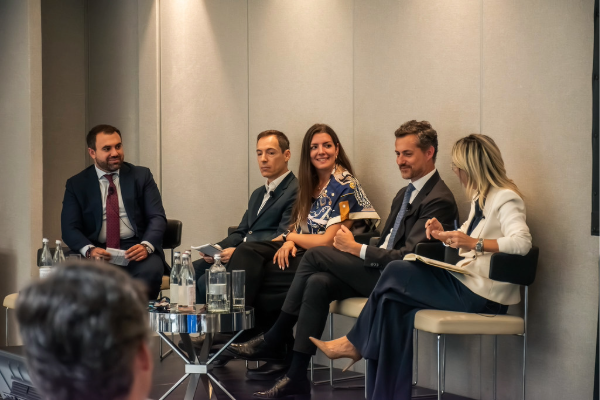
Panellists included:
- Maria Teresa Solaro - Partner at FIVERS
- Letizia Coradeschi - Investment Director at SUSI Partners AG
- Davide Ferrucci - Junior Partner at F2i
- Javier Cano - Managing Director Project & Structured Finance EMEA & APAC at Recurrent Energy
The panel was moderated by Daniel Garcia, head of business development at Glas.
Key takeaways
The Financing Streams: Beyond Commercial Banks panel examined how alternative lenders and financing models complement traditional bank lending in the energy transition.
Banks remain the foundation of project finance, offering low-cost capital for mature, contracted assets. However, regulatory limits and the rapid growth of the renewables market create space for debt funds, mezzanine providers, and other non-bank financiers. These actors bring higher risk appetite, faster execution and flexible structures that can support earlier-stage projects, portfolio financing or multi-technology models.
Key themes included the need to optimise capital structures across a project's lifecycle, combining senior loans, mezzanine, and holdco-level financing to recycle equity and accelerate growth. Legal tools such as project bonds and state-backed guarantees further expand financing options, especially in emerging areas like storage and e-mobility.
Overall, panellists stressed that there is no "one-size-fits-all": the future of financing the energy transition lies in combining banks, funds, multilaterals and insurers to align risk, cost of capital and project maturity.
Panel 6 - Data Centres: Opportunities in Co-location
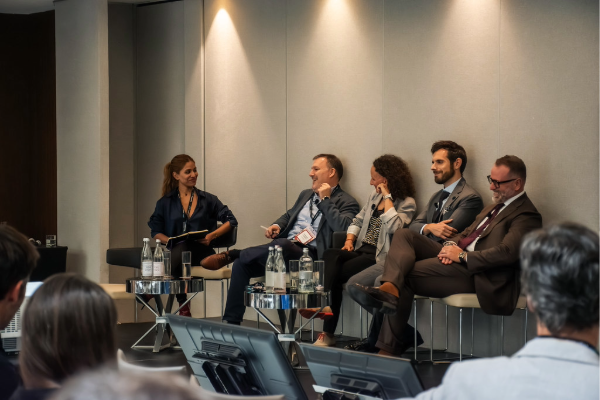
Panellists included:
- Fabio Spucches - CEO at Greenfield
- Alessandro Mussari - Senior Principal, Infrastructure Investments at DWS
- Francesc Filiberto - Head of Solar Development at Nuveen Infrastructure
- Johana Afenjar - Chief Operating Officer at Telis Energy
The panel was moderated by Maya Chavvakula, head of news at inspiratia.
The Data Centres: Opportunities in Colocation panel examined Italy's emergence as a Mediterranean hub for digital infrastructure and the challenges of powering rapid capacity growth.
With 500MW installed and another 500MW under construction, Italy's strategic position – linking Europe to Africa, the US and Asia via undersea cables – makes Milan a rising hub alongside Frankfurt and London. Southern Italy also offers major untapped potential, with land, renewable energy and cable stations supporting expansion beyond tier-one cities.
Grid connection is the biggest constraint: facilities take 1-2 years to build but 7-10 years to connect. To bridge this gap, developers are turning to colocated renewables, storage, and temporary gas generation, despite its controversy.
Investors demand reliable green PPAs, efficient design, and innovative cooling solutions. While SMRs attract attention, panellists noted mismatched timelines and uncertainty.
The key takeaway from the discussion it that Europe will not "catch up" with the US, but must expand steadily to meet demand and avoid repeating past dependence on external supply chains.
Panel 7 - Evolution of M&A Financing
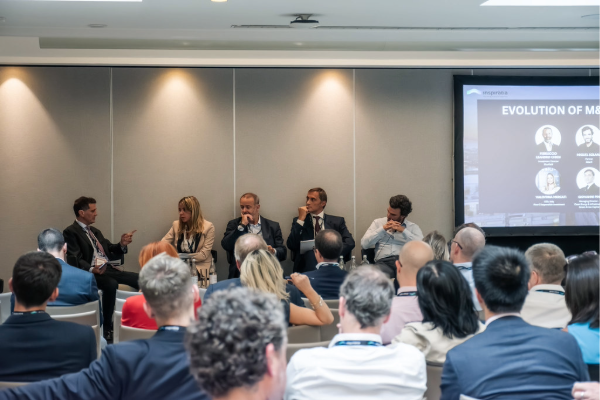
Panellists included:
- Ferruccio Leandro Chiesi - Investment Director, Southern Europe at Bluefield
- Miguel Solana - Partner at Alter5
- Valentina Mercati - CEO, Italy at Five-E Responsible Investment
- Giovanni Pinelli - Managing Director, Clean Energy & Infrastructure at Green Arrow Capital
The panel was moderated by Giulio Maroncelli, head of corporate at DLA Piper.
Key takeaways
The Evolution of M&A Financing panel examined how financing structures are adapting to the growth of renewables and storage amid regulatory uncertainty and competitive auctions.
Innovative approaches such as co-development agreements, convertible loans, and bridge financing ("bridge to MACSE," merchant or PPA structures) are increasingly used to fund development and manage delays. Mid-sized projects below, €50 million, can particularly benefit from these flexible models.
Developers on the panel highlighted the importance of early de-risking – securing grid access, substations, and land – as well as internalising engineering expertise or partnering with co-developers. Maximum project value is usually achieved at ready-to-build stage, with MACSE auctions driving significant expected transaction activity.
Investors noted strong liquidity in the market, with private equity and infrastructure funds active despite modest returns. Securing long-term tariffs and achieving procurement synergies are key, while integrating energy market expertise is becoming essential to support merchant exposure.
This panel established that BESS is a core, non-negotiable asset class, and consolidation will grow as the market matures.